Tuesday, April 28, 2015

The Seattle Indians? How the Tribe Almost Moved to the Pacific Northwest

In 1964, the Tribe almost became the Seattle Indians. The Oakland Indians and the Texas Indians were also a possibility.

Sick's Stadium in Seattle was almost home to the Tribe in 1964

Most Cleveland Indians fans are familiar with the plot of the 1989 film Major League. In that cult-classic, former showgirl and recent widow Rachel Phelps becomes the owner of the Indians after the team is left to her by her late husband. She immediately hatches a plan to move the team to Miami. This, of course, takes place pre-Marlins, who ironically would go on to beat the Tribe in the 1997 World Series. What many fans might not remember is that the Tribe almost left Cleveland 25 years before the events of Major League.

In 1964 then Indians majority owner Gabe Paul was not happy with the dwindling attendance the Tribe was experiencing and even less pleased with team’s lease at Municipal Stadium. The 1963 Indians had drawn only 7,200 fans a game and Paul began entertaining offers from other cities. Business and civic leaders from Arlington, Texas, Atlanta, Seattle, and Oakland pursued a deal, with the latter two being the front-runners to lure the team away from the shores of Lake Erie. It wasn’t the first time the team had eyed a move. In 1958, it was strongly rumoured that owner William R. Daley was set to move the club to Minnesota, a claim GM Frank Lane repeatedly denied to the media throughout the season.

In September of 1964 though, a group of California businessmen offered Gabe Paul, who had purchased controlling interest in the team a year earlier, $6.5 million to move the team to Oakland. Paul rejected the offer. Meanwhile, a group in Seattle mounted a drive to sell 8,000 season tickets for the 1965 season in hopes of swaying the Indians to take up residence in Sick’s Stadium (pictured). The day after the second game of the 1964 World Series, Paul flew to the Pacific Northwest and planned to visit Oakland afterwards. Oddly, Seattle’s minor league team was named the Indians from 1903 to 1937 when they became the Rainiers, then briefly the Angels from 1965-1968, before going back to the Rainiers.  

Earlier in 1964, ground was broken for the Oakland-Alameda County Coliseum, but delays and cost overruns would keep that facility from being opened until the fall of 1966 when the AFL’s Oakland Raiders hosted their arch rivals the Kansas City Chiefs.  Atlanta was only briefly in the running as the Milwaukee Braves, despite great success in Wisconsin both on the field and at the box office, were looking to relocate to the rapidly growing Georgian capital.  Arlington had the financial resources to bring the Indians south, but the move would have required Turnpike Stadium, set for completion in 1965, to be expanded. It eventually was (and then renamed Arlington Stadium) when the Washington Senators moved there in 1972.

It was Seattle, however, that posed the biggest threat to Cleveland. The rumors and speculation swirled for over a month, but on October 16, 1964, the Indians announced their intention to stay in Cleveland, thanks in large part to much more favorable stadium lease. In 1966 frozen food magnate Vernon Stouffer bought 80% of the team making him the majority owner. Paul stayed on as president and general manager. Stouffer was motivated to make the purchase to ensure the Tribe stayed put. However, in 1971 he struck a deal that would have had the Indians playing 30 home games in New Orleans’s Superdome in 1974, perhaps as a precursor to moving to the Big Easy. American League owners voted that idea down.

Seattle fans were disappointed to hear that the Indians were not going to move west. Indeed, an Associated Press wire story from September 11, 1964 called the move all but certain, further building the Emerald City’s hopes. They’re sour mood didn’t last too long, as in December of 1967 the American League awarded the city an expansion franchise that would become known as the Pilots. They began play in 1969, but moved to Milwaukee a year later and became the Brewers.

Had Cleveland lost the Indians in 1964, one wonders if baseball would have returned to the city? Washington, D.C., and Kansas City both received expansion franchises after losing teams, but it’s unclear if Cleveland would have been given the same consideration. Also, had the Tribe moved, the world might never have heard of the NFL’s Baltimore Ravens.

With no Indians, Art Modell would have gotten the new stadium he coveted, and would have never had the slightest inclination to move the team to Baltimore. If Cleveland had been granted an expansion franchise by Major League Baseball, it’s fun to speculate what the team would have been called, presuming the Indians kept the old name in their new home. The Cleveland Spiders?  The Blues? Bluebirds? What do you think? – By PF Wilson


Like vintage Cleveland/NE Ohio stuff? Be sure to check out Home Shirts Cleveland for apparel featuring gone, but not forgotten, stores, restaurants, sports teams, and more from the North Coast.


Monday, September 8, 2014

Joan Rivers Interview 2007 for Folio Magazine

I had the great pleasure of interviewing Joan Rivers back in 2007 for Folio, the weekly paper in Jacksonville. At the time they didn't post content online, so I have taken my original text and re-posted it here. Enjoy.

Joan Rivers
By P.F. Wilson

Joan Rivers talks about life lessons, dealing with the paparazzi, and how she felt about having her Red Carpet gig handed to Star Jones.

Folio: Your latest vehicle is How’d You Get so Rich? on TV Land. How did that come together?

JR: They came to me while I was doing Celebrity Apprentice, and said “we’d think you’d be the ideal choice because you’re a good interviewer, you’re a lucky Lou, you’re a big mouth and you’re funny. The show is a combination of all three. We meet the people, find out how they got rich, which is always fascinating, then we get a chance to go into their houses, see how they spend their money, and what their toys are.

Folio: You’ve probably seen many a fortune gained and lost in Hollywood. Do you ever talk with these people and think “I dunno, is that the best way to spend all that money?”

JR: They all have one thing in common. They all have great energy and great belief in their product and worked very hard for it. No body is a sloth.

Folio: What about the gal that won the lottery?

JR: I spoke to her afterwards, and she’s already investing, she’s got a business going. [People that are smart], once they get money, they know the value of it, and they have great time with it. And they are all also very charitable.

Folio: There’s a documentary about you, Joan Rivers: A Piece of Work, coming out June 11. Did a film crew follow you around constantly?

JR: Yes, for a year and a half. The deal was I gave them total access, and they just followed me. I absolutely forgot they were there. After a year and half you get up in the morning and they’re they are.

Folio: Were there things you didn’t want in it?

JR: No, the deal was---and I was very glad to make that kind of deal---it was their choice. I hate (documentaries) where (the subject) has the final choice. Then it’s not an honest look. It’s the way the person wants to be perceived.

Folio: Speaking of people following you around, are you tired of TMZ?

JR: Let me tell you, we are so lucky to have the paparazzi want to take our picture, and anyone who doesn’t get that should go back to being a pizza waitress. “Oh, the paparazzi won’t leave me alone!” You know what? Go sell hats at Macy’s, then they’ll leave you alone. Never bothers me, seriously delighted to do it.

Folio: But trying to pick on Phil Donahue because he looks old, isn’t that a little mean?

JR: Isn’t everything? Let’s open up US Magazine and OK Magazine, or The New York Post. People love gossip and people love negative gossip, you know that. That’s the way of the world.

Folio: A lot of folks think you got a raw deal with E! and your Red Carpet coverage. Were you secretly happy when Star Jones bombed?

JR: Oh no, no, no. I was not secretly happy. I was obviously happy! Of course Everyone thinks it’s so easy. Geena Davis, they had her do it one year, and she gave out a statement to the press saying “I won’t ask ‘who are you wearing?’” Melissa and I were laughing. “Wait until she finds out how tough it is.” It took her two interviews to say “who are you wearing?” We were delighted to see her just fall on her face!

Folio: Why are people so surprised when you don’t know who they are? Hollywood’s a big town isn’t it?

JR: There are a 1000 channels if you have cable. We don’t know who everybody is. And we don’t know what everybody is doing. I think everyone should be polite and say “hello, I’m so and so.”

Folio: Or wear nametags.

JR: Wouldn’t that be nice? No, I don’t know who you are, I don’t watch Jersey Shore.

Folio: In college you studied anthropology. Did that help you in any way in Hollywood?

JR: (Laughs) No, but I just loved it. I always liked to think I could go back and do it. But it’s great when you travel as much as I do, as we all do in our business, (you say) “oh my gosh, I want to go see this, and I’m lucky enough to be able to go see (those things). I played Turkey and I got to see (the ancient city of) Ephesus, the ruins of Delphi---if I’d become an anthropologist, I might never have had a chance to see them. My other profession has brought me to places where I want to always go and look.

Folio:  Is it easier to be in comedy now because of all the outlets, or harder because there is more competition?

JR: I think in the old days it was much better because when you did land on the Carson show people saw you. Somebody can do 26 shots on Letterman, and no one knows who the hell they are.  Of course the Internet is changing everything. People come up with a viral video and they’re a star.

Folio: Do you have any energy for the Internet?

JR: I’m dying to do a late night talk show on the Internet, dying to.

Folio: You seem to fit so easily into different jobs, why is that?

JR: I just figure try everything. No one remembers the failures.  All you need each year is one success. Try everything, what’s the worst that could happen? I found out that I don’t like to direct by directing a movie (Rabbit Test). If I hadn’t tried that, I would have been all my life saying “I want to direct a movie.” Life is very fast, you go around once. Try.

Folio: How do you feel about the state of stand-up comedy today?

JR: I think it’s wonderful, you can talk about anything. Audiences are willing to hear hilarious things, they’re wide open.

Folio: And you have tons to talk about?

JR: Yes. Miss USA turns out to be a pole dancer? Thank you God. Ten minutes of jokes came into my head right away.

Folio: What’s your favorite topic these days?

JR: All these cheating husbands! Tiger Woods, Jesse James, what’s his name, from the Today Show.

Folio: You mentioned wanting to do an Internet talk show. Anything else on your showbiz bucket list?

JR: I’d love to go back to Broadway. I’ve never been in a real movie. Muppets Take Manhattan doesn’t count. Spaceballs doesn’t count.


Thursday, March 6, 2014

What if the USFL had Survived?

By PF Wilson

There’s a neat web series on NFL.com called The N “if” L. It’s produced by NFL.com analyst Dave Demeshek and offers different scenarios based on a particular event in league history being altered. There’s a great one called “What if ‘The Drive’ had Stalled?”

My favorite though is from 2012 called “What if the USFL Hadn’t Folded?” It’s interesting and pretty funny, but as an aficionado of defunct leagues, it got me thinking. I decided to really take a hard look at the premise, and here’s what I came up with.

In Demeshek’s universe, the USFL survives and moves to the fall. He points out accurately that the USFL had a lot of big stars, but he incorrectly states the league had a lot of cash. Some teams did, most did not, though they weren’t swimming in red ink like some of the teams that wound up folding, or almost all of the teams from the World Football League of the mid-70s.

Demeshek’s surviving USFL:

East                                             West
Baltimore Stars                              Arizona Wranglers*
Birmingham Stallions                      Memphis Showboats
Jacksonville Bulls                           Oakland Invaders
New Jersey Generals                     Portland Breakers
Orlando Renegades                        San Antonio Gunslingers

*I added Arizona, because Demeshek only pulls nine names out his USFL pog box in the video.

The problem with this line up is San Antonio and Portland were both broke. Oakland, even with the addition of a bunch of talented players from the Michigan Panthers saw attendance plummet. For the record, the original fall configuration for the USFL was to be as follows:

USFL 1986 (proposed)

Liberty Division                           Independence Division
Baltimore Stars                               Arizona Outlaws
Birmingham Stallions                      Jacksonville Bulls
Memphis Showboats                     Orlando Renegades
New Jersey Generals                     Tampa Bay Bandits

Many of the teams that played in the spring of 1985 either folded or merged instead of moving to fall. As early as 1984, when the move to fall was announced, teams were moving, folding or merging. This was the USFL in 1984 before the decision was made to move to fall.

USFL  1984:

Atlantic Division                          Southern Division
New Jersey Generals                     Birmingham Stallions
Philadelphia Stars                           Jacksonville Bulls
Pittsburgh Maulers                         Memphis Showboats
Washington Federals                      New Orleans Breakers
                                                      Tampa Bay Bandits

Central Division                            Pacific Division                
Chicago Blitz                                   Arizona Wranglers
Houston Gamblers                           Denver Gold
Michigan Panthers                            Los Angeles Express
Oklahoma Outlaws                          Oakland Invaders
San Antonio Gunslingers

Under my thesis, the USFL survives because it does not move to fall, despite Donald Trump’s insistence. Demeshek, by the way, alludes to the widely accepted belief that Trump killed the USFL, and he is spot on there.  This is also supported by the excellent ESPN 30 for 30 documentary Small Potatoes: Who Killed the USFL?

So here is what the USFL probably would have looked like in the spring of 1985, had the league not announced a move to fall play for the 1986 season.

1985 (Spring without fall move)

Atlantic Division                          Southern Division
New Jersey Generals                     Birmingham Stallions
Philadelphia Stars                           Jacksonville Bulls
Pittsburgh Maulers                         New Orleans Breakers
Orlando Renegades                      Tampa Bay Bandits
                                                               
Central Division                           Pacific Division
Memphis Showboats                     Arizona Outlaws
Houston Gamblers                          Denver Gold
Michigan Panthers                          Los Angeles Express
San Antonio Gunslingers                 Oakland Invaders

FOLDED/MERGED:  Oklahoma Outlaws, Chicago Blitz

The Outlaws still merge with the Arizona Wranglers, and the Chicago Blitz, who were near the bottom of the league in attendance and TV ratings are folded. Washington still moves to Orlando to become the Renegades. The Breakers don’t have to move to Portland, and can stay in New Orleans where fan support is strong. Same with Philadelphia. The league continues on into the spring of 1986 though a few more unhealthy teams succumb.

USFL 1986 (Spring no move to fall)

Eastern Division                          
New Jersey Generals                     
Philadelphia Stars                          
Pittsburgh Maulers                         
Orlando Renegades                        
Michigan Panthers

Southern Division
Birmingham Stallions
Jacksonville Bulls
New Orleans Breakers
Tampa Bay Bandits

Western Division
Arizona Outlaws
Denver Gold
Houston Gamblers
Memphis Showboats                                   

FOLDED: Los Angeles Express, Oakland Invaders, San Antonio Gunslingers

The Express, under league control, limp to the end of the 1985 season and are folded. San Antonio, hampered by a tiny stadium and a cash-poor owner, are folded. The Oakland Invaders also disband. The league’s remaining teams are in fairly good shape financially and pretty well supported. Trump, frustrated that his suggestion about a fall schedule is dismissed, sells the Generals.

USFL 1987 (Spring)

Eastern Division                        
New Jersey Generals                     
Philadelphia Stars                          
Pittsburgh Maulers                        
Orlando Renegades                        
Michigan Panthers

Southern Division
Birmingham Stallions
Jacksonville Bulls
New Orleans Breakers
Tampa Bay Bandits

Western Division
Arizona Outlaws
Denver Gold
Houston Gamblers
Memphis Showboats

The USFL still signs enough big name players to compete with the NFL, and in 1988 the league plays its last spring season. However, this time the news is good.

USFL 1988 (Spring)

Eastern Division                         
New Jersey Generals-z                 
Philadelphia Stars                          
Pittsburgh Maulers-m                 
Orlando Renegades                     
Michigan Panthers

Southern Division
Birmingham Stallions
Jacksonville Bulls
New Orleans Breakers
Tampa Bay Bandits

Western Division
Arizona Outlaws
Denver Gold-z
Houston Gamblers-z
Memphis Showboats

(Will join NFL. Will join WLAF, m-moves, z-merges)

Following the 1988 season, the USFL could have simply continued on, but more likely the NFL sues for peace. As part of the deal, several of the USFL franchises will join the NFL and begin play in the fall of 1990. However, after six seasons spring football is fairly popular and the NFL knows this. To prevent another spring circuit from popping up and causing the league grief the NFL forms the World League of American Football (WLAF) to also begin play in 1990, but in the spring (one year earlier than the non-USFL timeline). The WLAF takes 5 USFL teams and also expands into Europe with franchises in London, Barcelona, and Frankfurt. In the US though, things are tricky as teams are moved and folded, and one NFL relocation is altered.

In 1988 Bill Bidwell looking for a new home for his St. Louis Cardinals cannot move the team to Phoenix, because the Outlaws are already there and about to join the NFL. As part of the merger agreement, Bidwell moves the team to Baltimore. The USFL Stars who were eyeing a move to Maryland as part of their migration to the NFL, are forced to move instead to Charlotte. They also absorb the Generals. Denver merges with Jacksonville who joins the NFL. Birmingham and Memphis also join the NFL, swelling the league to 34 teams.

In 1989 there is no spring football. In the spring of 1990 the 5 remaining USFL teams (the Pittsburgh Maulers are sold and move to Sacramento to become the Surge) join the WLAF and continue to play in the spring.

Former USFL teams 1990

Charlotte Stars, Birmingham Stallions, Jacksonville Bulls, Arizona Outlaws, and Memphis Showboats join the NFL.

WLAF 1990
London Monarchs, Barcelona Dragons , Frankfurt Galaxy, Orlando Renegades, Michigan Panthers, New Orleans Breakers, Tampa Bay Bandits, and Houston Gamblers along with the Sacramento Surge (the former Pittsburgh Maulers) form the WLAF. The Montreal Machine are also added to round the circuit out to 10 teams.

CFL Expansion into the US.

In the early 1990s many CFL teams were in trouble. With the folding of the Montreal Alouettes in 1987, the league was down to 8 teams and almost all of them were struggling financially. A new wave of owners hired Larry Smith as commissioner with the understanding he would seek expansion south of the border. But with a larger NFL and a stronger WLAF, opportunities would have been limited.

Originally the CFL placed teams in Baltimore, Sacramento, San Antonio, Las Vegas, Shreveport, Birmingham, and Memphis, though not all at the same time.

With the USFL/NFL merger, the CFL still expands into the US, but instead winds up in Portland, Las Vegas, San Antonio, Shreveport, Syracuse, and Miami. The US experiment still ends with all but one of the teams folding. However, the move still saves the CFL. It still takes a few more years for the league to get back on solid financial footing, but the influx of much needed cash provided by the expansion fees buys the CFL time.

The Montreal Machine of the WLAF move to Columbus, Ohio to become the Ohio Glory, paving the way for the CFL’s Portland franchise, the only surviving US team, to move to Montreal and become the new Alouettes.

Los Angeles Rams and Los Angeles Raiders
In 1995 the Rams leave Los Angeles for owner Georgia Frontiere’s hometown of St. Louis, and the Raiders head back to Oakland.

The Jacksonville Jaguars and the Carolina Panthers
These teams never exist as the Bulls and Stars are already in those two cities.

The San Antonio Browns
In 1996, Art Modell, dissatisfied with the lack of progress in getting a new stadium built in Cleveland, moves the Browns to a city that built a new stadium just three years earlier: San Antonio, recently abandoned by the CFL. Cleveland still sues, and is awarded the “new” Browns who being play in 1999. Modell’s team changes its name to the Riders.

The Los Angeles Panthers
Also in 1996, the WLAF’s Michigan Panthers move into the Coliseum in Los Angeles, while the WLAF adds a team in Scotland to take Michigan’s place. The Rhein Fire also joins the WLAF.

The Houston Oilers
In 1997, the Oilers move to Tennessee, but this time there is no layover in Memphis. The team heads straight to Nashville and plays at Vanderbilt’s stadium until a new facility can be built.
                                                                                                                               
The Houston Texans
In 2002 Houston returns to the NFL with the expansion Texans.

The XFL
Never happens.

The NFL and WLAF Today

NFL

AFC EAST                                                                                           
Buffalo Bills                                                                                    
Miami Dolphins                                                                               
New England Patriots                                                                      
Jacksonville Bulls                                                                             
New York Jets        

AFC NORTH
Cincinnati Bengals
Cleveland Browns
Indianapolis Colts
Pittsburgh Steelers                                                                           

AFC SOUTH                                                                                 
Birmingham Stallions                                                                        
Houston Texans                                                                          
Memphis Showboats                                                                       
Tennessee Titans                                                                             
San Antonio Riders

AFC WEST
Denver Broncos
Kansas City Chiefs
Oakland Raiders
San Diego Chargers


NFC EAST                                                                                  
Baltimore Cardinals                                                                       
Dallas Cowboys                                                                               
New York Giants                                                                             
Philadelphia Eagles                                                                           
Washington Redskins

NFC NORTH
Chicago Bears
Detroit Lions
Green Bay Packers
Minnesota Vikings

NFC SOUTH                                                                                 
Atlanta Falcons                                                                               
Charlotte Stars                                                                                
New Orleans Saints                                                                         
Tampa Bay Buccaneers                                                                   
                                                                                                                         
NFC WEST
Arizona Outlaws
Los Angeles Panthers
St. Louis Rams
San Francisco 49ers
Seattle Seahawks

WLAF

EUROPE                                                                                                               
Amsterdam Admirals                                                         
Barcelona Dragons
London Monarchs
Scotland Claymores
Rhein Fire

NORTH AMERICA                                                                
Tampa Bay Bandits                                                             
Ohio Glory
Sacramento Surge
Orlando Renegades
New Orleans Breakers

Another Scenario: The Out-of-Court Settlement Merger 1986/87

With the lawsuit looming in 1986, and with one of its owners (Al Davis) about to testify for the plaintiffs, the NFL discusses the idea of absorbing several of the USFL franchises. There’s only one problem. They don’t want Trump.

In this timeline, with The Donald removed from the equation, the NFL takes the Baltimore Stars, Birmingham Stallions, Memphis Showboats, the Jacksonville Bulls, the Arizona Outlaws and perhaps the Bandits, though they would have to move. New Jersey isn’t included because three teams would have to share one stadium and neither the Jets nor Giants want a direct competitor getting in the way of their monopoly.

This predates the Cardinals departure from St. Louis, and with his back-up markets also taken, the Cards either stay put or, more likely, wind up in Charlotte.


Wednesday, February 12, 2014

P.F.’s Top 40 Songs of 2013


Sorry it’s a little late. And I won’t bore you with a lot of editorial comment, but it was another good year for tunes. It was a 3 team race for the top, won out by Scotland’s very fine CHVRCHES. Enjoy!


Oh, and if you go to this episode of the podcast, you can hear FanGirl and I count down our respective Top 5s.

1. “The Mother We Share” - CHVRCHES
2. “The City” – The 1975
3. “Fred Astaire” – San Cisco
4.  “Magnetic Eyes” – Matrix and Futurebound
5. “Harlem” – New Politics
6. “Diane Young” – Vampire Weekend
7. “This is What it Feels Like” – Armand Van Buren
8. “Night Cafe” – OMD
9. “Counting Stars” - OneRepublic
10. “Spark” -  Afrojack
11. “Somewhere Only We Know” – Lily Allen
12. “Top of the World” – Imagine Dragons
13. “Right Action” –Franz Ferdinand
14. “Metroland” - OMD
15. “Stay Out” – Nina Nesbitt
16. “The Beach” – San Cisco
17. “Chocolate” – The 1975
18. “Midnight Run” – Andy Hawk & The Train Wreck Endings
19.  “I Always Knew” – The Vaccines
20. “Safe and Sound” – Capital Cities
21. “Skip to the Good Bit” – Rizzle Kicks
22. “Live and Die” – Avett Brothers
23. “Why Am I The One?” F.U.N.
24. “Shiver” – Walk the Moon
25.  “House of Gold” – Twenty-one Pilots
26.  “Sad Night, Where is Morning” – The Ocean Blue
27.  “Love is a Bourgeois Construct” – Pet Shop Boys
28. “24 Hours” –Sky Ferriera
29. “Unbelievers” – Vampire Weekend
30. “When Can I See You Again?” – Owl City
31.  “The Pit” – Silversun Pickups
32. “Recovery” – Frank Turner
33. “Lightning Bolt” – Jake Bugg
34. “Strawberry Smile” – Andy Hawk & The Train Wreck Ending
35. “Dear Darlin’” –Olly Murs
36. “Somewhere to Hide” – Shiny Toy Guns
37. “Anna Sun” – Walk The Moon
38. “Still Into You” - Paramore
39.  “Helen of Troy” - OMD
40. “Shooting Star” – Owl City


Monday, February 10, 2014

Daily Currant Writer Found Dead after Writing Sochi Engineer Found Dead Story

By PF Wilson

The story spread like wildfire across the Internet this past weekend, after news broke Saturday morning that the engineer responsible for the glitch during the Winter Olympic opening ceremony in Sochi had been found dead.


After one of five snowflakes failed to turn into the final Olympic ring, the Russian hosts were red-faced, as it were. Then Saturday morning, the Daily Currant ran the piece about the engineer. For almost a day the Internet and social media in particular, were abuzz with the bazaar tale of how he met a gruesome end after apparently embarrassing his homeland. However, it all turned out to be hoax, perpetrated by the Daily Currant; a hoax that went viral.

Many Internet experts, social media gurus, and garden-variety know-it-alls snickered about how the public was once again hood-winked  by a hoax news story. Few were surprised though, as people across the web constantly fall for made up news stories from The Onion, Daily Currant, Ross Rants, and Fox News.

Russian officials were not amused by the hoax though, and insist that the real engineer is alive and well and working on a special project in Barnaul, Siberia. However, the writer who penned the fake news story was found dead Sunday night. As word spread out across the Internet of the writer’s demise, local law enforcement said no one had contacted them for details, and they were pretty sure that no such incident had actually taken place. Still many speculated about the writer’s possible death.


A spokesman for Russia’s satirical newspaper The Radish said it demonstrates the danger of poking fun at the wrong things. “But the Russian people took no offense at the story about the engineer. We have great sense of humor. We laugh at the same things you do. You laugh at President Obama,” he said and then paused before adding: “We laugh at President Obama.” He then vehemently insisted that the Russians were not involved in the writer’s death. Two Russian nationals were questioned a few blocks from the Daily Currant’s headquarters, but were released after telling the FBI that they knew nothing about a fake news story, or satirical news website, and were merely looking for “moose and squirrel.”

Pattie Wilson also reported on this story.

Monday, December 31, 2012

P.F.’s Top 40 Songs of 2012.


It’s that time again. Another year has passed and it’s time to reveal PF’s Top 40 of 2012. Looking over the list one last time it seems to get less and less accurate as you head from the top down. These are my 40 favorite tracks of 2012, but you after you leave the top 10 or so, you could interchange a lot of the entries.

Some notes and observations:

Last year Gym Class Heroes featuring Adam Levine checked in right at 40, and were kept from a higher spot on the 2011 chart due to repeated airplay. Not their fault of course. Then along come Paradise Fears in 2012 with a knockout cover that lands high in the chart. First of all Adam Levine “gave away” perhaps his best melody ever. The kids from South Dakota (that’s Paradise Fears) took a step in the right direction by singing the whole song, even the parts rapped by Gym Class Heroes in the original. Well done. Paradise Fears also help accomplish a rare feat; the same song appears twice in the chart. They’re cover of Carly Rae Jepsen's “Call Me Maybe” placing a few spots below the original.

Imagination Movers, a band geared mostly toward pre-teens and their parents stormed high up into the chart with the title track from their 2012 album Rock-o-Matic. Also, everyone hates Nickelback---except me. I like their single anyway. Not a huge fan of the rest of the catalog, but still puzzled by the backlash. It’s almost a cliché at this point.

Anyway, enjoy the chart and check some of the artists and tunes out.

40. “Beekeepers Daughter” – All-American Rejects
39.  “On the Road”- Keane
38. “Operator” – The Ready Set
37. “Runaways” – The Killers
36. “Midnight City” – M83  
35. “Oh, Darling” – Plug in Stereo
34. “That’s Why God Made the Radio” – The Beach Boys
33.  Owl City featuring Carly Rae Jepsen (a.k.a. Owly Rae Jepsen)
32. “The Winner” – Pet Shop Boys
31. “Anything Can Happen” – Ellie Goulding
30. “When We Stand Together” – Nickelback
29. “Dedication to My Ex” – Lloyd
28. “Sanctuary” – Paradise Fears
27.  “Tonight is the Night” – Outasight
26. “Uncharted Shores” – Uncharted Shores, formerly One Direction (U.S.)
25. “I Will Wait” – Mumford and Sons
24. “No Hope” – The Vaccines
23. “Little Talks”- Of Monsters and Men
22. “Only the Horses”- Scissor Sisters
21. “My Terrible Friend” – The Pains of Being Pure at Hear
20. “Banner” - LIGHTS
19. “Your Silent Face” – The Submarines”
18. “Call Me Maybe” – Paradise Fears
17. “We Are Young” – fun (DJ Reidiculous Mix)
16. “The Worst Thing About Me” – We Are The in Crowd
15. “Friday is Forever” – We the Kings
14. “Call Me Maybe” – Carly Rae Jepsen
13. “Carried Away”- Passion Pit
12. “Primadona” – Marina and the Diamonds
11. “Summer Paradise” – Simple Plan (featuring K’naan)
10.  “Peace Sign” - LIGHTS
9. “I Started a Joke” – The Pet Shop Boys
8. “Rock-O-Matic” – Imagination Movers
7. “Bom Bom” – Sam and the Womp
6. “Dance with Me Tonight” – Olly Murs
5. “Thick as Thieves”- The Summer Set
4. “Say Nothing” - Example
3. “The Only Place” – Best Coast
2. “Stereo Hearts” – Paradise Fears
1. “Teenage Icon” – The Vaccines

Wednesday, January 11, 2012

P.F.’s Top 40 Songs of 2011.


If you know me, you know of my disdain for “chart” music. For as long as I can remember, I’ve only been able to stomach a few songs in the American popular charts. When I was 12 or 13 years-old I’d listen to American Top-40 with Casey Kasem, though I would end up rooting for/liking just two or three songs. Looking at the entire “Hot 100,” I’d maybe see a few more tracks I liked. The ones I did enjoy, of course, were the new wave songs (mostly). Rarely could I warm to a top-ten hit, though it did happen. And occasionally a song I liked from the start would get to the top of the charts, sometime to number 1. A similar situation occurred this year with my favorite song of 2011 peaking at number 8 on the Billboard chart.

It’s about as perfect a pop song as you could find. Better yet, repeated radio play didn’t manage to kill it, like numbers 39 and 40 on this chart. Good songs too, but you couldn’t escape them, and they just didn’t have the durability of the number 1 song. Another oddball is Bruno Mars. I never really got into his previous singles and all went top-ten here in America. Then over the summer, I immediately took a shine to “Marry You,” which promptly stalled at 80 on the “Hot 100.”

Enough editorializing though, here’s the list…

40. “Stereo Hearts” – Gym Class Heroes Featuring Adam Levine
39. “Without You” – David Guetta & Usher
38. “Let Down” – Hot Chelle Rae”
37. “Money” – The Drums
36. “Yacht Club” – Owl City Featuring LIGHTS
35. “Dig A Little Deeper” – Peter, Bjorn & John
34. “Colours”- Zebra and Snake
33. “Still Life” – The Horrors
32. “Our Perfect Disease” – The Wombats
31. “Magdalena” – Brandon Flowers
30. “Waste of Time” – Paradise Fears
29. “Tomorrow has to wait – Peter, Bjorn & John
27. “Tonight’s The Kind of Night” – Noah and the Whale
26. “Under Cover of Darkness” – The Strokes
25. “Norgaard” – The Vaccines
24. “Over You” – We The Kings
23.  “Rescue song (RAK Mix)” – Mr. Little Jeans
22. “Deer in the Headlights” – Owl City
21. “Marry You” – Bruno Mars
20. “Call Your Girlfriend” - Robyn
19. “Say You Like Me” – We The Kings
18. “I Feel Like Dancin’” – All Time Low
17. “Turn it Up” – Oh, Land
16. “Young Forever” – The Ready Set
15. “Can You Feel It” – One Night Only
14. “Forget About It” – All Time Low
13. “Master Chef Synesthesia (Buttery Biscuit Bass)” - Swede Mason
12. “Dumb Love” – Sean Kingston
11. “Post Break-up Sex” – The Vaccines
10. “L.I.F.E.G.O.E.S O.N.” – Noah and the Whale
9.   “Simple Trance-Like Getaway” – Never Shout Never
8.  “What Makes You Beautiful”- One Direction
7.  “Bedroom Eyes” – Dum Dum Girls
6.  “Toes” - LIGHTS
5.  “Someone Like You” – The Summer Set
4.  “The Body” – The Pains of Being Pure at Heart
3.  “History of Modern Part I”- OMD
2.  “If You Wanna” – The Vaccines
1. “Tonight, Tonight” – Hot Chelle Rae”
       

Sunday, December 11, 2011

PF's Ad Portfolio. Print Edition.


What does P.F. do? 

Besides running two podcasts and writing for publications around the country, I also do ad copywriting across a variety of platforms. Below are some samples of my print efforts. To get a better look, you may need to click on the image and download it. Enjoy!

Newport Aquarium collateral:

Swiffer Wet full page magazine ad. This is the FSCI version:

94.9 The Sound billboard:
Maisonette ad that run in the Cincinnati Convention and Visitors Bureau magazine you pick up at the airport:
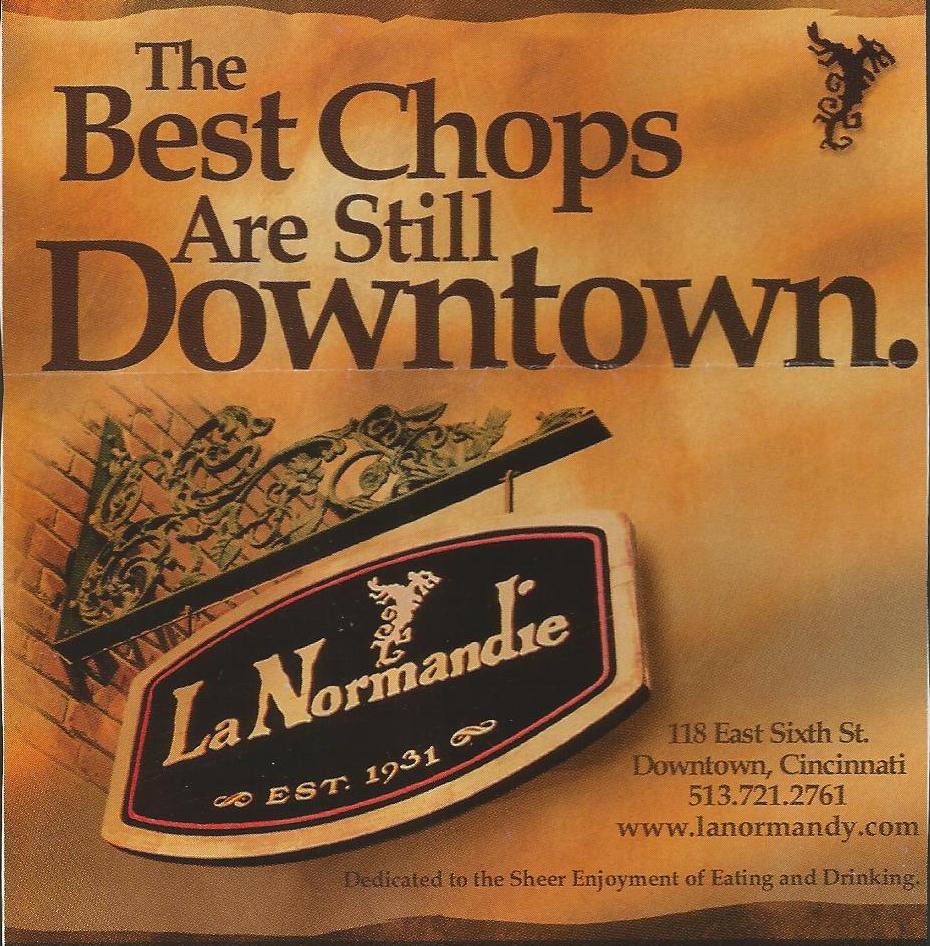
Ad for La Normandie that ran in Cincinnati Magazine:
Cover of collateral piece for King's Island:
And here's the first page of that piece:


Thursday, August 18, 2011

Friday is Forever Tour July 30 Columbus, Ohio


We the Kings, The Summer Set, The Downtown Fiction, Hot Chelle Rae, Action Item
(Photo by Hannah Wilson)

I was discussing music with my Scottish friend the other day. We’re the same age, and he was telling me that when he was in his teens there was nothing more important to him then finding out who had the number one song on the U.K. singles chart. Well, maybe his football club Celtic was a bit more important, but music was certainly a priority. At the that time an older co-worker told him “Brian, there will come a day when you don’t care who’s number one,” to which my friend laughed and said “never.”

About that same time in America, I was knee-deep in college radio and music journalism. I couldn’t imagine a time would come when I wasn’t obsessed with finding new bands. You know where this is going though right? We’re both big music fans, and in the past few years I’ve ramped up my search for new artists. Not because I’m tired of my collection, but because I want to keep that from happening.

Still, it’s not the same as back in the day. What happened? Well, primarily family, wish I wouldn’t trade for anything of course. And it’s family that has nudged me back toward music. My 13 year-old daughter, not unlike most kids her age, is very into music. When she heard that several of her favorite bands were coming to Columbus, she begged us to take her. She’s a good kid, so it didn’t take much convincing.

I drew concert duty, while my wife and younger daughter went shopping in C’bus. The little one was a bit disappointed, as her sister had made her a fan of most of the acts on the bill, particularly The Downtown Fiction and Hot Chelle Rae. I had become a fan of the latter, based largely on their hit single “Tonight, Tonight.” She was a good sport though, and got a surprise phone call while we were at the concert.

Five bands on one bill is a lot, and I’m pretty sure I would have felt that way 20 years ago, but quite a value for today’s young concertgoer. At 6:30 sharp, Action Item took the stage. Shortly before that, we met and interviewed Hot Chelle Rae. “This is so cool,” my daughter said as we made our way backstage. “That’s The Summer Set’s dressing room!” Further down the hall we found the kids from HCR. We crowded out on the fire escape with lead singer R.K. Follese and bass player Ian Keaggy. As a rule of thumb, I dislike virtually everything in the top 40, however HCR’s “Tonight, Tonight” is not only an exception, but arguably the song of the summer for 2011.

“That’s what we keep hearing,” said the group’s lead vocalist R.K. Follese. “I don’t think it’s going to get old, and we kinda like that.” It’s certainly one of the most perfectly crafted pop songs in recent memory.

“It’s one of the highest compliments we can have,” added bass player Ian Keaggy.

“It’s really the same three chords,” RK noted, “which is what a lot of our material is. We like to keep the same chords, because it’s really about the melody. And we wanted something catchy and fun for summer.” Mission accomplished.

During the interview I was surprised to learn that these boys don’t consider themselves an alternative act like say, The Strokes, or even the other bands on the bill. They see themselves more in the vein of Maroon 5, or the Script. That being said, they list influences that run from The Beatles and Queen to Muse and Everclear. When I mentioned that they kind of put me in the mind of Rooney, R.K. excitedly said “yeah, Rooney, great one.”

Before we turned them loose, my daughter snapped a few pics. Meanwhile I took out my cell phone and called my younger daughter, then handed it to R.K. “Hi this is R.K. from Hot Chelle Rae, I hear you’re a big fan and know all the words to our song…we’re sorry you couldn’t come out and see us…yes, I know you’re only seven, but you’ll have to see us next time,” he said chuckling. Just the nicest young band you’d ever want to meet.


Their six song set was of course too short, but the show had to stay on schedule. HCR belted out an ironic cover of Katy Perry’s “Teenage Dream” before thundering into their top-ten hit. The latter of course got the crowd singing along and waving their hands in the air, and rightfully so. It will be nice seeing these guys play longer sets in the future as they open for more bands, and headline their own dates. No Cincinnati appearances are planned though fall. However, they are with The Script in Columbus on September 9, but not here the following evening. Bummer.

Between Hot Chelle Rae and The Downtown Fiction, we got to speak to We the Kings frontman Travis Clark. While waiting for him to come out of the tour bus, my daughter spotted Jess Bowen, drummer for The Summer Set. Pictures were taken, shirt signed, and a brief discussion of girl drummers took place. My daughter is also a percussionist.

Back behind the tour bus we met Travis Clark, who seemed rather shy. I asked if his band, We the Kings, felt like the older brothers on this tour with so many young bands. “It’s weird,” he began, “we’re all the same age, we just started earlier.” The band formed while its members were all in junior high school. “It seems like we’ve done this forever. It seems we learn stuff from every band we tour with, whether we’ve been together longer than them or not.” At that point my young assistant took over asking the most girly question she could think of.

“How long does it take to do your hair?” Mr. Clark has an apparently well-kept red ‘do.

“I think I roll around a lot when I sleep and it becomes half dreads and half craziness,” he offered. “A lot people say it’s filled with secrets. Everyday it’s something different.”

What band would Clark like to tour with she then asked. The not-surprising answer: Coldplay. “I think I would go crazy if we toured with them,” he said. “Chris Martin is one of my favorite songwriters, and I would watch them every night, jaw wide opened.”

We made it back inside in time for The Downtown Fiction, who were pretty indistinguishable from the other acts. Lead singer Cameron Leahy looked like he could have been fronting an ‘80s band, and seemed to channel the late Michael Hutchence of INXS at times. That was kind of cool.

The Summer Set, who we’d seen earlier in the year when they opened for All Time Low, sounded good, but not great. That seemed to have more to do with the sound system however, than the band themselves. Everyone sounded a bit muddy really. That or my ears were shot by the time TSS hit the stage.

We the Kings began their set at around 9:30 and finished up just under 90 minutes later. Oddly, there was no encore, though it certainly would have been welcome. They played several new songs from their fine current album Sunshine State of Mind, finishing with their signature track “Check Yes Juliet.”

Afterwards, the members of all five bands dispersed throughout the venue to meet the fans. All four members of Hot Chelle Rae stood in the lobby and shook hands, took photos, and signed stuff. Members of other groups stood at the merch table, mingled in the seating area, or hung out behind hall. They all seemed happy to do it, and indeed were enjoying themselves. We snapped a few more pick and headed home to Cincinnati , my daughter already planning her next concert.


Monday, August 1, 2011

Making Concessions: How Airport Operators and Concessionaires Can Help Each Other

Forward:Those of you that have read this blog know that this is a repository for the odds and ends that come out of my writing. I’m saddened that this piece has ended up here. I wrote this for an airport trade publication called Airport Revenue News back in 2009. Unfortunately, it is still relevant today. But that’s not what bothers me. I wrote this, on assignment from ARN and never heard a word back. I did another article for them about the folks who run Phillips Seafoods’ airport locations. I was paid for that. For this I received no explanation as to why it never ran, and why I didn’t get so much as the customary kill fee. I worked hard on this piece, and a lot of nice people helped out including Hudson News, Areas USA, Delaware North, Dunkin Donuts, the Cincinnati Northern/Kentucky International Airport, Raleigh/Durham International Airport, and Miami International Airport. Thanks to all of you. Sorry this didn’t get a bigger audience…

Passenger traffic at many airports continues to dwindle as the economy tries to navigate its way out of recession. Fewer people boarding aircraft means fewer customers for airport concessionaires, and many of those operators are looking to their landlords for relief. They seem to be finding it on a variety of levels.

“One of the main items (of) conversation that can be had (between) airports and their operators, if necessary, starts with the Minimum Annual Guarantee (MAG),” says Mike Mullaney, Executive VP of Corporate Strategy and Business Development for The Hudson Group. “(MAG) is an important part of a contract (and) it’s there to…insure that the airport doesn’t have an underperforming operator, and that (the airport has) a guaranteed revenue stream.”

However, under certain conditions, Mullaney notes, both airport and vendor may need to revisit the MAG. “I think traffic declines….have occurred, along with much thinner spending by passengers…in some markets.” In these instances, the concessionaire may be required to pay the MAG, even though their units are performing at an otherwise high level. “There are just less people in the building,” Mullaney explains, “and the sales have dropped. So a MAG can have the unintended consequence of becoming a penalty to an operator.” He adds, “for example, if (a vendor’s)…sales per enplanement are holding steady or actually increasing, that’s an indication that the vendor is still really maximizing their operation. But if enplanements and penetration are down slightly due to the economy, or airlines, or other things, and your contract is going into MAG, that becomes an unintended penalty to the operator. I think that is one reasonable area that operators and airports can have discussions (about) having a contractual relationship that isn’t economically penalizing to the operator, through no fault of their own.”

Several airports including Dallas-Ft. Worth (DFW), Cincinnati (CVG), Tampa (TPA) and Raleigh-Durham (RDU) have reduced or waived MAGs in response to various circumstances related to the downturn. “When Delta first started reporting cuts in traffic here (in 2005),” begins Dave Kellerman, Retail Manager of Commercial & Business Development at CVG, “the (airport board) awarded a 50% reduction in the MAG.” The Kenton County Airport Board (KCAB), which runs CVG, based that reduction on Delta’s anticipated cuts at their Midwestern hub for the following year. “Basically it resulted in most concessionaires paying percentage rent (as opposed to MAG).”

Operators like Hudson though, aren’t looking for MAGS to disappear all together. “Our company position is that the MAG shouldn’t go away,” he states. “MAG…(is) an important fiscal component of airport bonding and other things. It’s really just the level at which MAGS are at where I think airports can have discussions and dialogues with operators to make adjustments.” Mullaney has a firm grasp on such issues having once worked for CVG as that facility’s Manager of Commercial and Business Development.

Matt King, President of Travel and Hospitality services for Delaware North, takes a broader approach. “I think first and foremost,” he says, “would be (for airports) just to remain flexible. Airports are different and they’ve been impacted differently through the recession.”

One constant at the eighteen airports in which Delaware North operates restaurants, King notes, is that passenger traffic is down. “I imagine that’s true across the country,” he adds. “But they’re down at different levels, meaning some are down single digits and some are down thirty percent. What we’re trying to do is approach the situation on an individual airport basis.”

Delaware North likes to look at a variety of alternatives when it comes to operating under reduced passenger traffic. “The options we like to look at,” says King, “are things like adjusting operating hours, (or) increasing the term of …a contract. In severe cases, where passenger traffic has dropped significantly, like in the 30% range, we like to consider closing some units on a temporary basis.” He notes that they haven’t had to result to the latter scenario.

Kevin Houser, vice president of development for Dunkin’ Donuts, is another proponent of modifying hours of operation. “Typically many of (our airport) leases have very specific standards as to hours of operation,” he states, “and some concepts have more traction in the A.M. daypart, where others have more traction in the P.M daypart. I think the option of flexible hours certainly would be beneficial.”

Airports are weary about adjusting hours, but most, according to King have been very cooperative. “They don’t like (adjusting hours), as a general rule,” he says. “It might send a bad sign to their constituents and the traveling public. But the fact of the matter is that airport traffic and volume is down and, unfortunately, all of the articles in the national and international press are saying it’s likely to drop further this fall.”

CVG’s Kellerman agrees. “We have lowered the required amount of hours (vendors) have to be open. We also encourage them to reduce staffing during non-peak hours, so that they can take advantage of the busier times. If you have multiple locations…you can do things like stock, clean or something like that.”

Pricing has been another area in which vendors have sought to fine-tune things. Dunkin’s Houser often suggest to his franchisees that they seek permission to move slightly above street pricing. “Maybe get street plus 10 percent or street plus 15 percent,” he says. “The airport can certainly affect that.” Since the airports typically get a cut of the revenue, they’re usually amenable.

“We adjusted our street pricing to a plus 10 percent,” says Ingrid Hairston, Business Development Officer for Raleigh-Durham Airport. “We did get that in to effect (around) May of this year.”

CVG as well has allowed vendors to move above street pricing levels, at least for the time being. “Going back to July of last year,” Kellerman explains, “the board allowed street pricing plus 10 percent on a temporary basis. We’ll look at that again at the end of this year.”

King says that the airports in the Delaware North portfolio have also been very cooperative in terms of being open to ideas that can help the operator run more efficiently. “They’re all trying to work through (the recession),” he says. “We don’t have any airports in our portfolio that have been obstinate, or difficult. What they want is information. They want to make a fact-based decision, so if we can show them the statistics on how our revenue is off, and how if we open a unit an hour later in the morning, it really won’t have an impact on the overall concession revenue.” The airports have listened.

Opening later of course, or closing earlier, helps control one of the biggest operating expenses, payroll. If an adjusted flight schedule leaves a concourse with significantly fewer passengers in a particular day-part, cutting labor can help control costs, without negatively affecting the customer experience. “There’s no sense in paying someone to stand around,” King says.

Even as the overall number of flights falls though, contracts are still being bid and awarded. The negotiation process doesn’t seem to have changed much either, even in this sluggish economy. “Overall, we’ve had a very strong first half of 2009 with a lot of new contracts,” says Hudson’s Mullaney. “Our company position is this…you have to look at each contract opportunity in and of itself and make sure that it’s a strong, viable marketing contract over the term.”

Accessing risk has always been part of the process, and while the economy injected some caution into the equation, Hudson continues to move forward. “We’re all hoping that the economy and air traffic has hit the bottom of the trough, and that we will slowly build from here. We have to be a little bit more conservative in our projections and planning, but…we have not past on an opportunity, or elected not to proceed with an opportunity because of concerns about traffic (or) economics. We’re in this business for the long term and you’ve got to take the tough times with the good times.”

Similarly, not much has changed for Delaware North, save for giving a bit more scrutiny to some of the wording in the leases. “I think we’re trying to pay attention…to the language around operating hours,” says King, “and trying to get (the airport) to give us some more discretion there. We’re trying to be careful with the rent, but right now…my sense is that the concessionaires are not approaching (bids much)…differently than they have been, in the hopes that business will recover.”

Ramon Bourgeois, Regional Manager for Areas USA, says that his company, and the airports in which they operate, are working together in another area. “I think what the airports can do, and most of them are doing it right now, is to work side by side with the concessionaires in ways to increase…check average and increase traffic at (store) locations.”

Dave Kellerman feels that trying to raise the check average is a little underrated by some vendors. “It’s so powerful,” he says, “that even in hard economic times, I can name a few concessionaires here in Cincinnati, that have done that. Their neighbor’s sales have gone down, but their sales have gone up through proper training, suggestive selling and (having) a more aggressively customer-friendly atmosphere.” If the concessionaire can, as he puts it, “capture more of what’s being left on the table,” it helps the dollar per ticket average, as well as overall sales. “Which will in turn help the airport because (under most) contracts… airport revenue is generated through percent of sales.” Even more so with reduced MAGs.

With fewer passengers coming into the airports, it is of course more vital than ever for vendors to capture the business of those who are flying. Bourgeois cites Miami International’s efforts to help in that area. “(They have brought) musicians to the airport, so people actually stop and listen to the music and look at the shops… then spend a dollar here, a dollar there.”

Letting vendors extend lease lines, and place items just outside of their locations, is also helpful, and something more and more airports are allowing. Kellerman points out that CVG, long before the current downturn, encouraged their vendors to come out a little past the lease line. “It wasn’t too long ago, concessionaires did not do that,” he says. “We basically….with the…RFP and developments in 2002 and 2003, encouraged lease line selling. We think it’s something that is essential to the concept itself.” Of course the airport doesn’t want to see vendors dragging items out into the middle of the concourse, but they do realize that merchandise and displays are eye-catching and can in turn drive traffic into a location. “That’s how malls do it, that’s how street stores do it, and that’s how airports should do it.”

The folks at Raleigh-Durham aren’t entirely sold. “We’re pretty darn strict,” laughs Hairston. “To be fair, we are. And that’s for a variety of reasons, not the least of which is ease and convenience of using the building.” That makes sense, because if you impede travelers from making their way down the concourse, they’ll show their resentment by not stopping, or by shopping some place else.

When trying to drive more traffic into a store or restaurant, vendors will sometimes introduce new products. While airports seem to be all for expanding a location’s offerings, they still must be mindful of lease agreements with other vendors. “We have pretty strict and tight agreements which specifically lay down what product categories (can be in the units),” says Kellerman. The airport is all for driving sales, but they also want to make sure each shop keeps it uniqueness. “We don’t want cannibalization,” he adds. “For instance, would we let a restaurant carry newspapers? The answer there would be ‘no.’ That’s a pretty core product of the news and gift locations. We…encourage (vendors) to pick up new item that we would be likely to approve.”

Another party that can be helpful to both airport and concessionaire is The Transportation Security Administration (TSA). “The amount of time it takes passengers to go through a checkpoint is very, very important to us,” Bourgeois insists. “When you see those big lines, we are losing money. We need those (passengers) to get through a checkpoint as fast as possible, so they have time to stand in our stores and shop.” He says that TSA has been very cooperative in responding to the vendors’ concerns at the airports Areas is in. That’s not surprising though, when you consider that, though TSA isn’t concerned with profits, they too want to deliver good customer service.

Tough times bring people together, and it seems the current downturn has brought a greater level of understanding to the airport/concession relationship. “We both have a responsibility to communicate,” says King, “and to make sure that the channels of communication stay open. It’s no secret that airports are struggling, concessionaires are struggling, it’s just a sign of the times. If we’re communicating it makes the process less painful.”